Blue Light Protection in 2026: Separating Fact from Fiction for Thousand Oaks Professionals
In an era where screens dominate our daily lives—from morning emails to evening streaming—the conversation around blue light has never been more relevant. Yet amid the marketing claims and product proliferation, many Thousand Oaks professionals find themselves asking: Do I actually need blue light protection, or is this just another eyewear trend?
As opticians who've served Ventura and Los Angeles counties for over 46 years, we at Academy Optical have witnessed countless vision innovations come and go. But blue light technology represents something different—a genuine response to how dramatically our visual habits have changed. The average American now spends over 7 hours daily looking at digital screens, and that number climbs even higher for professionals in tech hubs like Thousand Oaks and nearby Westlake Village.
This isn't about jumping on the latest trend. It's about understanding what blue light actually does to your eyes, who genuinely benefits from protection, and how to make informed decisions about incorporating this technology into your eyewear wardrobe. Whether you're a software developer in Newbury Park logging 12-hour coding sessions or a creative professional color-grading videos, the right information can transform your visual comfort and long-term eye health.
Understanding Blue Light: What Science Actually Tells Us

Blue light occupies the highest energy wavelengths in the visible light spectrum, ranging from 380 to 500 nanometers. Not all blue light deserves its villainous reputation—natural blue light from the sun actually regulates our circadian rhythms, boosts alertness, and supports cognitive function during daylight hours Harvard Health Publishing.
The concern emerges with artificial blue light exposure, particularly from LED screens and fluorescent lighting that emit concentrated wavelengths around 455nm. According to research published by the American Macular Degeneration Foundation, prolonged exposure to high-energy visible (HEV) blue light can contribute to digital eye strain and may pose cumulative risks to retinal health over decades AMDF Blue Light Research.
However—and this matters tremendously—the American Academy of Ophthalmology emphasizes that current evidence doesn't support claims that blue light from screens causes permanent eye damage in typical use scenarios. Digital eye strain, the discomfort you feel after extended screen time, stems primarily from reduced blinking rates, fixed focal distances, and poor ergonomics rather than blue light wavelengths alone.
This nuanced reality means blue light protection serves specific purposes for certain individuals rather than functioning as a universal necessity. Understanding where you fall on this spectrum helps you invest wisely in eyewear technology that genuinely serves your lifestyle.
Digital Eye Strain: The Real Culprit Behind Screen Discomfort

Walk into our Thousand Oaks location at The Oaks Mall on any given afternoon, and you'll hear similar complaints: "My eyes feel exhausted by 3 PM," or "I can't focus on my screen without getting headaches." These symptoms characterize Computer Vision Syndrome, the medical term for digital eye strain affecting an estimated 65% of American adults.
The syndrome manifests through multiple symptoms: persistent headaches, blurred vision, dry or irritated eyes, difficulty refocusing between distances, and neck or shoulder pain. While blue light receives much of the blame, the condition actually results from a complex interaction of factors American Optometric Association.
Your eyes perform an extraordinary amount of work during screen time. Unlike reading printed material, viewing digital content requires constant tiny movements as your eyes track and refocus on pixelated letters. Most people blink 15-20 times per minute during normal activities, but this rate plummets to just 5-7 blinks per minute during concentrated screen work. This dramatic reduction means your tear film doesn't adequately refresh, leading to the gritty, burning sensation familiar to anyone who's powered through an afternoon of spreadsheets.
Screen positioning compounds these issues. When your monitor sits too high, too low, or at an improper distance, your eyes and neck muscles strain to maintain focus. The flickering and glare from screens add another layer of visual stress, particularly in Thousand Oaks offices with bright California sunlight streaming through windows.
Blue light blocking lenses address one component of this multifaceted problem—they reduce the amount of high-energy visible light reaching your retinas, which can minimize glare and improve contrast. But they're most effective when combined with proper screen habits, regular breaks, and correctly prescribed lenses for your specific viewing distances.
Who Actually Benefits from Blue Light Protection?
5 Professional Profiles That Need Blue Light Glasses
Not everyone requires blue light filtering lenses, but certain professional and lifestyle patterns make them genuinely valuable:
1. Extended Screen Time Professionals (8+ Hours Daily)
Software engineers, graphic designers, accountants, and writers who spend entire workdays staring at screens experience cumulative blue light exposure that can benefit from filtering. If you're coding at a Thousand Oaks tech company or managing spreadsheets for a Westlake Village firm, blue light lenses can reduce the gradual eye fatigue that accumulates throughout marathon work sessions.
2. Evening Screen Users Struggling with Sleep
Blue light suppresses melatonin production, the hormone that signals your body it's time to sleep. If you regularly use devices within two hours of bedtime—checking emails on your phone or streaming shows on your tablet—blue light filtering lenses can help preserve your natural sleep cycle. This matters particularly for professionals who need sharp cognitive performance the next day.
3. Light-Sensitive Individuals
Some people experience genuine photophobia or heightened light sensitivity due to migraines, dry eye conditions, or neurological factors. For these individuals, blue light filtering provides measurable comfort by reducing the intensity of the most problematic wavelengths. We've fitted countless Thousand Oaks residents with blue light lenses specifically for migraine management.
4. Post-LASIK or Cataract Surgery Patients
Eyes recovering from surgical procedures often exhibit increased light sensitivity during healing. Blue light filtering lenses offer protection during this vulnerable period and can provide long-term comfort for patients who notice persistent sensitivity even after full recovery.
5. Outdoor-Indoor Transition Workers
If your workday involves frequent movement between California's bright outdoor light and dimmer indoor spaces—common for real estate agents, retail managers, or field service professionals in Thousand Oaks—photochromic lenses with blue light filtering provide adaptive protection that adjusts to changing conditions.
The Science of Blue Light Filtering Technology
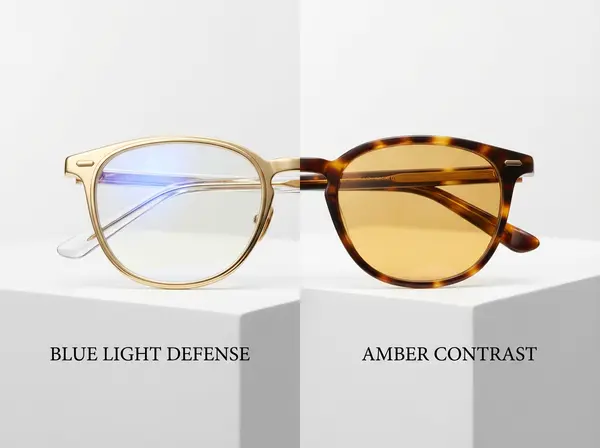
Blue light filtering lenses employ two primary technologies, each with distinct characteristics and applications. Understanding these mechanisms helps you select appropriate protection for your specific needs.
Lens Coating Technology applies a surface treatment that reflects blue light wavelengths before they penetrate the lens. These coatings typically filter 20-40% of blue light while maintaining clear, colorless lenses that don't distort color perception. The technology proves ideal for professionals who require accurate color rendering—photographers, designers, or anyone working with visual media—while still reducing eye strain from screen glare.
Lens Material Pigmentation incorporates blue light blocking compounds directly into the lens substrate, creating a subtle yellow or amber tint. These lenses filter 40-90% of blue light, providing maximum protection but with the trade-off of slight color shifts. They're best suited for evening use or for individuals with severe light sensitivity who prioritize comfort over color accuracy.
The lens specifications matter considerably. Look for products that specifically target the 400-450nm range, where high-energy visible blue light concentrates. Quality lenses from brands we carry at Academy Optical—including options from Maui Jim, Oliver Peoples, and other luxury manufacturers—provide detailed spectral transmission data showing exactly which wavelengths they filter.
Some manufacturers also integrate blue light filtering with other beneficial coatings: anti-reflective treatments that minimize glare from overhead lighting, hydrophobic coatings that repel moisture and fingerprints, and UV protection that shields against ultraviolet radiation. This comprehensive approach to lens design creates eyewear that addresses multiple visual challenges simultaneously.
Complementary Strategies for Digital Eye Health

Blue light filtering lenses work best as part of a holistic approach to visual wellness. Nancy and I recommend these evidence-based strategies to our Thousand Oaks clients:
The 20-20-20 Rule provides the foundation for healthy screen habits: Every 20 minutes, look at something 20 feet away for at least 20 seconds. This simple practice allows your ciliary muscles—the tiny muscles that control lens focusing—to relax from their sustained near-focus position. Set phone reminders or use desktop applications that prompt these breaks automatically.
Optimal Screen Positioning dramatically impacts eye strain. Your monitor should sit 20-26 inches from your eyes with the top of the screen at or slightly below eye level. This positioning minimizes the need for neck flexion and allows for natural downward gaze angles that reduce tear evaporation. In our Thousand Oaks store, we often help clients understand how home office ergonomics interact with their prescription needs.
Artificial Tear Supplementation counteracts the reduced blinking that occurs during screen time. We recommend preservative-free artificial tears used proactively—before your eyes feel dry—rather than waiting until discomfort develops. The dry California climate in Thousand Oaks and surrounding areas already challenges tear film stability, making this supplementation even more critical.
Night Mode Software shifts screen color temperature toward warmer, redder tones that emit less blue light. Most devices now include built-in night shift features, and applications like f.lux provide granular control over color temperature throughout the day. While not a replacement for blue light filtering lenses, these tools provide complementary protection, especially during evening hours.
Ambient Lighting Balance prevents the harsh contrast between bright screens and dark surroundings that forces your pupils to constantly adjust. Use bias lighting—a soft light source behind your monitor—to create gentle ambient illumination that reduces this contrast without causing glare on your screen.
Selecting the Right Blue Light Protection for Your Lifestyle
The eyewear industry offers a dizzying array of blue light products, from bargain-bin $15 glasses to luxury frames with premium coatings. Understanding what differentiates these options helps you invest appropriately.
For All-Day Office Work, select clear blue light filtering lenses with coating technology that blocks 30-40% of blue light. This provides meaningful protection without color distortion that could interfere with tasks requiring color accuracy. Pair these lenses with anti-reflective coatings to minimize glare from overhead fluorescent lights common in Thousand Oaks office buildings.
For Evening Digital Use, consider amber-tinted lenses that block 60-90% of blue light. Keep these as a second pair specifically for post-dinner screen time when melatonin preservation matters most. Many of our clients maintain a dedicated "evening pair" on their bedside table for reading tablets or checking phones before sleep.
For Combination Digital and Outdoor Work, explore photochromic lenses that darken in sunlight while maintaining blue light filtering properties indoors. This eliminates the need to switch between regular sunglasses and blue light glasses as you move between Thousand Oaks's sunny outdoor spaces and air-conditioned offices.
Frame Selection Considerationsmatter as much as lens technology. Larger frames with minimal curvature work best for computer glasses because they provide a wider field of clear vision at typical screen distances. However, if you're incorporating blue light filtering into everyday prescription glasses, choose frames that suit your facial features and personal style—you'll wear them more consistently when you genuinely love how they look.
At Academy Optical, we custom-fit blue light lenses to your specific prescription needs and working distances. Unlike one-size-fits-all reader glasses with blue light coatings, professionally fitted eyewear accounts for your pupillary distance, vertex distance, and the precise focal lengths where you view screens most frequently.
Common Blue Light Protection Myths Debunked

The rapid growth of blue light products has spawned considerable misinformation. Let's clarify the most persistent myths:
Myth: Blue Light from Screens Will Blind You
Reality: Current research provides no evidence that typical screen use causes macular degeneration or permanent retinal damage in humans. While blue light can damage retinal cells in laboratory conditions with extreme exposure levels, the intensity from devices remains far below harmful thresholds. Your eyes face greater risk from UV exposure during a sunny Thousand Oaks afternoon without sunglasses than from years of screen time.
Myth: Blue Light Glasses Eliminate Digital Eye Strain
Reality: Blue light filtering addresses one component of Computer Vision Syndrome, but it won't solve problems caused by poor posture, inadequate blinking, incorrect prescriptions, or suboptimal screen positioning. Think of blue light lenses as valuable tools in a comprehensive approach rather than miracle cures.
Myth: All Blue Light Blocking Glasses Are Equal
Reality: Significant variations exist between $15 fashion glasses claiming blue light protection and properly engineered optical lenses. Quality products provide spectral transmission data, consistent filtering across the lens surface, and optical clarity that maintains visual acuity. Inferior products may actually cause more eye strain through distortions or inadequate filtering.
Myth: You Should Block Blue Light All Day
Reality: Blue light serves important biological functions during daylight hours, regulating your circadian rhythm and maintaining alertness. Constant blocking can actually disrupt your natural sleep-wake cycle. Strategic filtering during extended screen sessions or evening hours provides benefits without interfering with healthy daytime blue light exposure.
Myth: Blue Light Glasses Are Only for Young People
Reality: All ages benefit from appropriate blue light management. Older adults actually face greater risks from blue light exposure due to larger pupil sizes in low-light conditions and age-related changes in the eye's natural blue light filtering ability.
Blue Light Protection in Your Complete Eyewear Strategy
We've long advocated for building versatile eyewear wardrobes rather than relying on a single pair of glasses for every situation. Blue light filtering lenses fit naturally into this philosophy.
Consider blue light glasses as your "work glasses"—optimized for the specific viewing distances and visual demands of screen-heavy tasks. Pair them with prescription sunglasses for outdoor activities, readers for casual book enjoyment, and perhaps progressive lenses for general wear. This specialized approach ensures each pair of glasses excels at its intended purpose rather than compromising across multiple uses.
For Thousand Oaks professionals building their eyewear collections, we typically recommend starting with these three essentials: quality prescription glasses with blue light filtering for daily work, polarized prescription sunglasses for California's intense sunlight, and a backup pair of either category. From this foundation, you might add computer-specific glasses with precise intermediate-distance prescriptions or evening blue light glasses with stronger filtering for bedtime device use.
The investment in multiple specialized pairs often costs less than you'd expect, especially when considering the cumulative visual comfort and eye health benefits over years of use. Our in-house lab at The Oaks Mall location allows for same-day turnaround on many lens orders, making it convenient to expand your eyewear wardrobe incrementally.
What to Expect During Your Blue Light Consultation
When you visit Academy Optical in Thousand Oaks to discuss blue light protection, Nancy, Diane, or our expert team will conduct a comprehensive assessment that goes well beyond simply selling you glasses.
We'll start by understanding your daily visual patterns: How many hours do you spend on screens? What devices do you use most frequently? What's your typical working distance from monitors? Do you notice symptoms like eye fatigue, headaches, or sleep disruption? This detailed lifestyle analysis reveals whether blue light filtering will meaningfully benefit your specific situation.
Next, we'll evaluate your current prescription and visual needs. Often, what feels like blue light sensitivity actually stems from an outdated prescription that forces your eyes to work harder during near tasks. We'll determine whether your discomfort requires lens updates, blue light filtering, both, or perhaps other solutions like proper computer glasses optimized for your monitor distance.
Frame selection follows, with guidance on styles that complement your facial features while providing optimal coverage for computer work. We'll show you the differences between various blue light filtering options—from clear coated lenses to amber-tinted varieties—and help you understand the tradeoffs between filtering strength and color perception.
Throughout this process, we maintain realistic expectations. If blue light glasses aren't likely to solve your specific concerns, we'll tell you honestly and explore alternatives. This integrity has sustained our family business across 46 years—we'd rather provide genuine solutions than sell unnecessary products.
The Future of Blue Light Technology
As we move deeper into 2026, blue light filtering technology continues evolving. Adaptive lenses that adjust their filtering intensity based on ambient light levels are entering the luxury eyewear market, offering dynamic protection that responds to your environment. Smart glasses with integrated light sensors can now optimize filtering in real-time, though these premium options remain considerably more expensive than traditional static filtering.
Lens manufacturers are also developing selective filtering technologies that block the most problematic blue light wavelengths around 455nm while allowing beneficial shorter and longer wavelengths to pass through. This precision approach maximizes eye protection while preserving the positive aspects of blue light exposure.
Perhaps most excitingly, research into the long-term effects of blue light exposure continues generating valuable data that will inform future recommendations. While current evidence suggests typical screen use doesn't cause permanent damage, ongoing studies will refine our understanding of optimal protection strategies for different age groups, occupations, and risk profiles.
Making an Informed Decision
Blue light protection represents a valuable tool for specific visual challenges—not a universal necessity for everyone with a smartphone. The key lies in honest assessment of your screen habits, symptom patterns, and lifestyle needs.
If you're spending 8+ hours daily on computers in a Thousand Oaks office, experiencing eye fatigue that impacts your productivity, or struggling with sleep quality despite good sleep hygiene, blue light filtering lenses deserve serious consideration. Combined with ergonomic improvements, regular screen breaks, and proper prescriptions, they can meaningfully enhance your visual comfort and overall wellbeing.
Conversely, if you use screens moderately, don't experience particular discomfort, and maintain good visual habits, blue light glasses may offer minimal benefits beyond what proper screen ergonomics already provides. There's no shame in concluding they're not worth the investment for your particular situation.
What matters most is making decisions based on accurate information rather than marketing hype. At Academy Optical, we're committed to providing that clarity—whether it leads to a sale or simply empowers you with knowledge to improve your visual health through other means.
Frequently Asked Questions About Blue Light Protection
Do blue light glasses really work, or are they just a marketing gimmick?
Blue light glasses effectively filter high-energy visible light from screens, which can reduce glare and improve visual comfort for people who spend extended hours on digital devices. However, they're not miracle solutions—they work best combined with proper screen ergonomics, regular breaks, and correct prescriptions. The American Academy of Ophthalmology confirms that while blue light doesn't cause permanent eye damage, filtering it can help some individuals with digital eye strain symptoms.
How do I know if I actually need blue light protection?
Consider blue light glasses if you spend 6+ hours daily on screens, experience afternoon eye fatigue or headaches, notice difficulty falling asleep after evening device use, or have light sensitivity conditions. Visit Academy Optical in Thousand Oaks for a comprehensive evaluation—we'll assess whether blue light filtering addresses your specific symptoms or if other solutions would serve you better.
Can I add blue light filtering to my existing prescription glasses?
Blue light filtering must be incorporated during lens manufacturing rather than added afterward to existing glasses. However, we can create new lenses with blue light coatings for your current frames if they're in good condition. Our in-house lab at The Oaks Mall often provides same-day service for lens replacements with blue light filtering added.
Should I wear blue light glasses all day or only during screen time?
Blue light serves beneficial functions during daylight hours, regulating circadian rhythms and maintaining alertness. We recommend wearing blue light glasses primarily during extended screen sessions and evening device use rather than all day. Many Thousand Oaks professionals keep dedicated computer glasses at their desks while using regular glasses for other activities.
What's the difference between cheap blue light glasses and professional optical lenses?
Quality blue light lenses provide specific spectral transmission data showing exactly which wavelengths they filter, maintain optical clarity without distortions, and offer consistent protection across the entire lens surface. Inexpensive glasses often lack adequate filtering, introduce visual aberrations, or fail to match your prescription accurately—potentially causing more eye strain than they prevent.
Do blue light glasses have a yellow or orange tint?
This depends on the filtering technology. Coating-based blue light lenses remain virtually clear while filtering 20-40% of blue light, making them suitable for all-day wear without color distortion. Pigmented lenses feature subtle amber tints and block 60-90% of blue light—ideal for evening use but less appropriate when color accuracy matters for work tasks.
Can children benefit from blue light protection?
Children's eyes allow more blue light transmission than adult eyes, making them theoretically more vulnerable to blue light effects. However, the American Academy of Pediatrics emphasizes that limiting total screen time and ensuring proper viewing habits matters more than blue light filtering for children. For kids spending significant time on educational devices, blue light glasses can provide additional protection as part of comprehensive digital wellness strategies.
Will blue light glasses help me sleep better?
Blue light suppresses melatonin production, potentially interfering with sleep when you use devices before bed. Wearing blue light filtering glasses (especially stronger amber-tinted versions) during evening screen time can help preserve natural melatonin levels. However, the most effective approach combines blue light filtering with reducing screen time within two hours of bedtime and maintaining consistent sleep schedules.
About the Authors
Nancy and Diane are the sister proprietors of Academy Optical, continuing their mother's 1977 legacy of exceptional vision care and luxury eyewear in Thousand Oaks. With decades of combined experience as authorized dealers for the world's finest eyewear brands including Oliver Peoples, they're in the store daily at The Oaks Mall, building lasting relationships with customers throughout Ventura and Los Angeles counties. Their carefully curated Oliver Peoples collection and expert fitting services ensure every customer finds frames that perfectly express their personal style.
Ready to discover whether blue light protection suits your visual needs? Visit Academy Optical on the second floor of The Oaks Mall in Thousand Oaks, directly across from Victoria's Secret. Our expert team provides personalized consultations, same-day lens service, and honest guidance—because protecting your vision matters more than making a sale. Call us at (805) 230-3999 or explore our luxury eyewear collection at academyopticalla.com.
