
The Essential Guide to Prescription Sunglasses: Why Every Thousand Oaks Resident Needs a Pair
Imagine driving along the Pacific Coast Highway with crystal-clear vision, no glare from the California sun, and complete UV protection—all without juggling between your regular glasses and clip-on shades. This is the promise of prescription sunglasses, one of the most practical yet often overlooked investments in eyewear.
At Academy Optical in Thousand Oaks, we've spent over 46 years helping California residents protect their vision while maintaining impeccable style. In our sunny climate, where we enjoy over 280 days of sunshine annually, prescription sunglasses aren't just a luxury—they're a necessity for eye health, safety, and comfort. Whether you're commuting to work, hiking in the Santa Monica Mountains, or enjoying Thousand Oaks' beautiful outdoor lifestyle, prescription sunglasses offer benefits that standard sunglasses simply can't match.
This comprehensive guide explores everything you need to know about prescription sunglasses: why they matter for your eye health, how they compare to alternatives, what lens technologies to consider, and how to choose the perfect pair for your lifestyle.
Why Prescription Sunglasses Matter More Than You Think
If you wear prescription glasses, you've likely experienced the frustration of choosing between clear vision and sun protection. Many people settle for less-than-ideal solutions: wearing contacts with non-prescription sunglasses, using clip-ons, or purchasing low-quality over-glasses styles. None of these options provides the optimal combination of vision correction, UV protection, and visual comfort that prescription sunglasses deliver.
The California Sun Factor
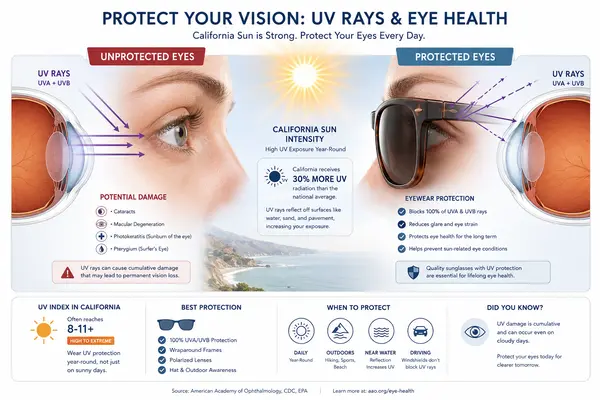
Living in Thousand Oaks means year-round sun exposure. According to the American Academy of Ophthalmology, cumulative UV exposure contributes to serious eye conditions including cataracts, macular degeneration, pterygium (surfer's eye), and even ocular melanoma. Just as you wouldn't skip sunscreen on your skin, your eyes deserve protection from harmful ultraviolet radiation.
California's Mediterranean climate compounds UV risks. The sun sits at higher angles during much of the year, increasing direct exposure. When you factor in reflective surfaces—water at the beach, pavement while driving, or sand at local parks—UV intensity multiplies. Reflective glare can increase UV exposure by 25-50%, making proper eye protection essential rather than optional.
Beyond UV Protection: The Complete Benefits
Prescription sunglasses offer comprehensive benefits that go far beyond basic sun protection:
Optimal Vision Correction:Unlike wearing contacts with regular sunglasses, prescription sunglasses provide stable, comfortable vision correction without the dryness or irritation contacts can cause in outdoor environments.
Enhanced Visual Acuity:Quality prescription sunglasses with polarized lenses dramatically reduce glare, improving contrast and clarity. This enhancement is particularly noticeable when driving, as research on polarized lenses for driving shows they reduce eye strain and improve reaction times by eliminating distracting reflections.
Safety and Comfort:Prescription sunglasses eliminate the need to swap between regular glasses and sunglasses or fumble with clip-ons while driving. This convenience translates to improved safety and reduced eye fatigue during outdoor activities.
Professional Appearance:Modern prescription sunglasses from luxury brands offer sophisticated styling that complements professional and casual wardrobes alike—far superior to the awkward appearance of over-glasses or dated clip-ons.
Prescription Sunglasses vs. Alternatives: Making the Right Choice
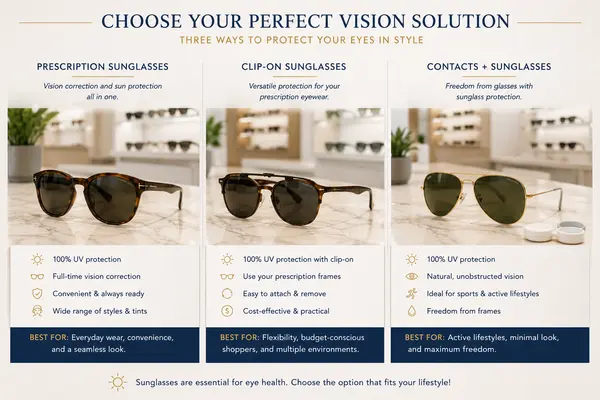
Before investing in prescription sunglasses, it's helpful to understand how they compare to common alternatives. Each option has distinct advantages and limitations.
Prescription Sunglasses vs. Contacts + Regular Sunglasses
Many people opt to wear contact lenses with non-prescription sunglasses. While this combination provides both vision correction and sun protection, it has significant drawbacks:
Outdoor Discomfort:Contacts can dry out quickly in California's low-humidity environment, especially during outdoor activities. Wind, dust, and pollen exacerbate irritation.
Maintenance Complexity:Contacts require daily care, carrying solutions when traveling, and can't be worn during swimming or water sports.
Cost Accumulation:The ongoing expense of contact lenses, solutions, and regular sunglasses often exceeds the one-time investment in quality prescription sunglasses.
Eye Health Considerations: Wearing contacts all day increases infection risks, particularly in dusty or outdoor environments common in Thousand Oaks hiking trails.
Prescription sunglasses eliminate these concerns while providing consistent, comfortable vision correction specifically optimized for outdoor light conditions.
Prescription Sunglasses vs. Clip-Ons
Clip-on sunglasses seem like an economical solution, but they present notable limitations:
Optical Quality:Most clip-ons don't align perfectly with your prescription lenses, causing distortion, reduced visual acuity, and potential eye strain.
Aesthetic Concerns:Clip-ons add bulk and often look dated or unprofessional—hardly ideal for California's style-conscious culture.
Convenience Issues:Constantly attaching and removing clip-ons is inconvenient, and they're easy to lose or damage.
Limited Lens Technology:Clip-ons rarely offer advanced features like polarization, anti-reflective coatings, or gradient tints that enhance visual comfort.
Prescription Sunglasses vs. Transition Lenses
Photochromic (transition) lenses darken in sunlight, offering an all-in-one solution. According to 2024 transition lens research, modern photochromic technology has improved significantly, but these lenses still have limitations:
Car Compatibility:Transition lenses don't darken adequately inside vehicles because windshields block the UV rays that trigger darkening. This is problematic for Southern California drivers who spend significant time on freeways.
Activation Speed:Even the newest generation transition lenses take 30-60 seconds to fully darken and several minutes to clear when moving indoors—inconvenient when quickly moving between environments.
Temperature Sensitivity:Photochromic lenses darken more in cold weather and less in hot weather—the opposite of what California residents need.
Style Limitations:While improved, transition lenses retain a slight tint indoors that some find unappealing for professional settings.
Dedicated prescription sunglasses provide instant, consistent tint and are specifically optimized for outdoor visibility without compromise.
8 Essential Benefits of Prescription Sunglasses for Thousand Oaks Residents
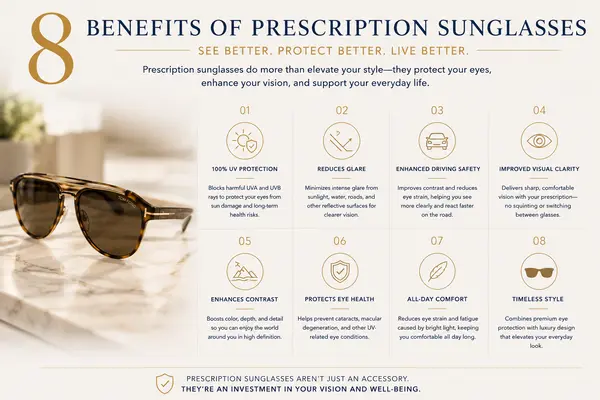
Understanding the specific advantages of prescription sunglasses helps you appreciate why they're a worthwhile investment in your vision health and quality of life:
1. Maximum UV Protection
Quality prescription sunglasses block 99-100% of UVA and UVB rays, providing comprehensive protection against long-term eye damage. At Academy Optical, all our prescription sunglasses meet or exceed UV protection standards, ensuring your eyes stay healthy for years to come.
2. Glare Elimination Through Polarization
Polarized prescription sunglasses filter horizontally-oriented light waves that cause glare from roads, water, and reflective surfaces. This technology dramatically improves visual comfort and clarity while driving or enjoying outdoor activities around Thousand Oaks' lakes and parks.
3. Enhanced Driving Safety
Prescription sunglasses improve driving safety by reducing squinting, eye fatigue, and dangerous glare from other vehicles. Studies on prescription sports sunglasses show improved reaction times and depth perception when wearing properly prescribed eyewear optimized for specific activities.
4. All-Day Comfort
Unlike contacts that can irritate eyes during long outdoor exposure, prescription sunglasses provide consistent comfort throughout California's sunny days. No more dry, gritty feeling after hours at the beach or a day of hiking.
5. Optimal Prescription Accuracy
Prescription sunglasses are manufactured to your exact specifications, ensuring optimal visual acuity that can't be achieved with non-prescription sunglasses worn over contacts. This precision is particularly important for complex prescriptions including astigmatism or progressive lenses.
6. Versatile Lens Options
Modern prescription sunglasses offer numerous lens options tailored to specific activities: gradient tints for driving, darker tints for beach activities, amber or copper tints for golf, and mirror coatings for extreme brightness conditions.
7. Long-Term Eye Health Investment
Protecting your eyes from UV damage today prevents serious conditions later. Cataracts, macular degeneration, and other UV-related eye diseases develop over decades of cumulative exposure. Prescription sunglasses are preventive healthcare for your vision.
8. Superior Style and Quality
Luxury prescription sunglasses from brands like Oliver Peoples, Cartier, and Tom Ford available at Academy Optical offer sophisticated aesthetics that complement your personal style. These aren't just functional items—they're fashion statements that enhance your appearance.
Understanding Prescription Sunglasses Lens Technologies
Modern prescription sunglasses incorporate advanced lens technologies that dramatically enhance visual performance. Understanding these options helps you make informed decisions about your eyewear investment.
Polarized Lenses: The Gold Standard
Polarization is arguably the most important technology for prescription sunglasses, especially in California's bright, reflective environments. Polarized lenses contain a special filter that blocks horizontally-oriented light waves while allowing vertical waves to pass through.
How Polarization Works:Light waves bounce off reflective surfaces (water, pavement, car hoods) in horizontal patterns. These horizontal waves create blinding glare that reduces visibility and causes eye strain. Polarized lenses act like horizontal blinds, blocking these problematic waves while maintaining clear vision.
Real-World Benefits:The difference between polarized and non-polarized sunglasses is dramatic. When driving along Thousand Oaks Boulevard on a sunny afternoon, polarized lenses eliminate windshield glare, reduce eye fatigue, and allow you to see into shadowy areas where pedestrians or vehicles might emerge. Boaters, fishermen, and beach-goers particularly benefit from polarization's ability to cut through water surface glare.
Considerations:Polarized lenses can make some digital screens difficult to read (particularly older LCD displays) and may interfere with certain heads-up displays in vehicles. However, most modern devices work perfectly with polarization, and the benefits far outweigh these minor limitations for most people.
Gradient Tints: Form Meets Function
Gradient lenses transition from darker at the top to lighter at the bottom, offering unique advantages for specific activities:
Driving Optimization:Gradient tints block overhead sun glare while allowing clearer vision through the lower portion for viewing the dashboard and road markings.
Fashion Appeal:Gradient sunglasses have a sophisticated, fashion-forward aesthetic that works beautifully for social occasions and professional settings.
Versatility:The lighter lower portion makes gradient sunglasses easier to wear indoors briefly (stopping into stores while shopping) without feeling excessively dark.
At Academy Optical, we help clients choose between solid tints for maximum sun protection, gradient tints for driving and versatility, or double-gradient tints that darken at both top and bottom for extreme conditions.
Lens Materials: Beyond Basic Glass
Prescription sunglass lenses come in various materials, each with distinct characteristics:
Polycarbonate:Impact-resistant and lightweight, polycarbonate lenses are ideal for active lifestyles and sports. They're virtually shatterproof, making them the safest option for children and athletes. Polycarbonate inherently blocks UV rays without additional coatings.
High-Index Plastic:For strong prescriptions, high-index materials create thinner, lighter lenses that look better and feel more comfortable. These are perfect for maintaining the sleek appearance of luxury frames without the thick edges of standard plastic.
Trivex:Combining polycarbonate's impact resistance with superior optical clarity, Trivex is an excellent premium option for prescription sunglasses. It's lighter than standard plastic and provides exceptional visual acuity.
Glass:Traditional glass lenses offer unmatched optical clarity and scratch resistance but are heavier and less impact-resistant than modern plastics. Some clients prefer glass for its superior optics despite the weight consideration.
Advanced Coatings and Treatments
Modern prescription sunglasses benefit from sophisticated coating technologies:
Anti-Reflective (AR) Coating:While it seems counterintuitive for sunglasses,AR coating on the back surface of tinted lenses eliminates distracting reflections from behind you (car headlights, bright windows) that can bounce into your eyes. This enhancement dramatically improves visual comfort and clarity.
Hydrophobic Coating:Water-repellent coatings cause water to bead and roll off lenses, essential for California's occasional rain and crucial for water sports enthusiasts.
Oleophobic Coating:Oil-resistant treatments prevent smudges and fingerprints from adhering to lenses, making cleaning easier and maintaining optical clarity.
Mirror Coatings:Reflective mirror coatings reduce visible light transmission, making them ideal for very bright conditions like beach environments or mountain snow. They also add a stylish aesthetic element.
Choosing the Perfect Prescription Sunglasses at Academy Optical
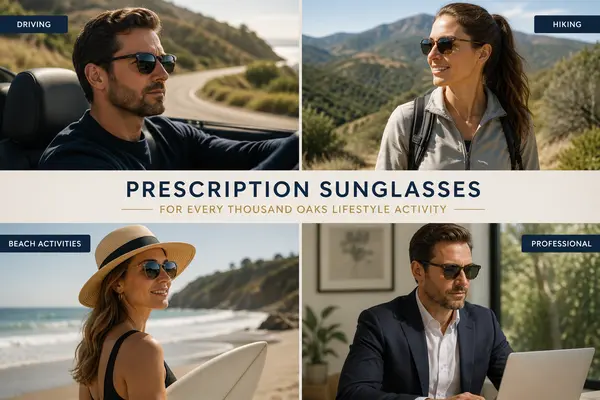
Selecting prescription sunglasses involves more than picking attractive frames. Several key factors determine which pair will serve you best for years to come.
Lifestyle Assessment
Your daily activities should guide prescription sunglass selection:
Driving-Focused:If you commute extensively or spend hours driving for work, prioritize polarized lenses with gradient tints. Frame styles with moderate coverage prevent peripheral light leaks without obstructing side vision. Wraparound sports styles aren't ideal for driving due to peripheral distortion.
Outdoor Sports and Recreation:Active lifestyles demand impact-resistant polycarbonate lenses, secure-fitting frames (ideally with adjustable temple tips or sports retention systems), and full UV protection. Consider darker tints for activities like beach volleyball or hiking in full sun.
Professional and Social:If you wear sunglasses primarily for aesthetic purposes and general sun protection during errands, focus on luxury frame aesthetics from brands like Oliver Peoples or Cartier. Moderate tint densities (gray or brown) maintain a polished appearance while providing adequate sun protection.
Water Activities:Boaters, fishermen, and beach enthusiasts benefit most from copper or amber-tinted polarized lenses that enhance contrast and cut through water glare. Floating or secured retention systems prevent losing expensive prescription sunglasses in water.
Frame Selection for Prescription Sunglasses
Not all sunglass frames work well with prescriptions. Several technical considerations influence frame choice:
Lens Size and Curvature:Larger, flatter lenses accommodate prescriptions better than small or highly curved lenses. Strong prescriptions may experience distortion in wraparound sports frames.
Frame Material:Acetate frames offer more color and pattern options, while metal frames provide a refined, professional aesthetic. Titanium and stainless steel resist corrosion from sunscreen, salt water, and perspiration—important for active California lifestyles.
Face Shape Compatibility:The same face shape principles that guide regular eyeglass selection apply to prescription sunglasses. Visit Academy Optical for personalized frame selection guidance based on your unique facial proportions.
Weight Distribution:Heavier prescription lenses require well-engineered frames with proper weight distribution to prevent sliding, pressure points, or discomfort during extended wear.
Prescription Considerations
Certain prescriptions present unique challenges for sunglasses:
Progressive Lenses:Progressive (no-line bifocal) prescription sunglasses require careful frame selection and precise fitting. The corridor for near vision is narrower in sunglasses, so experienced opticians are essential for optimal results.
High Prescriptions:Strong prescriptions benefit from high-index lens materials to minimize thickness and weight. Frame selection becomes more critical to disguise lens edges.
Astigmatism:Axis alignment in prescription sunglasses is crucial for astigmatic prescriptions. Professional fitting ensures your sunglasses maintain proper optical alignment for clear, comfortable vision.
At Academy Optical's Thousand Oaks location, our experienced opticians Nancy and Diane personally ensure your prescription sunglasses provide optimal vision correction and comfortable all-day wear.
Caring for Your Prescription Sunglasses Investment
Quality prescription sunglasses represent a significant investment in your vision health and style. Proper care extends their lifespan and maintains optical performance.
Daily Cleaning Best Practices:
Rinse with lukewarm water before wiping to remove abrasive particles
Use microfiber cloths specifically designed for optical lenses
Apply lens cleaner to cloth rather than directly to lenses
Avoid paper towels, tissues, or clothing that can scratch coatings
Storage and Protection:
Always store prescription sunglasses in a hard case when not wearing
Keep a spare case in your car for convenient protection
Avoid leaving sunglasses on dashboards where heat can damage coatings or warp frames
Consider retention straps or floating systems for water activities
Professional Maintenance:
Visit Academy Optical every 6 months for professional cleaning and adjustments
Tighten loose screws promptly to prevent frame damage
Replace nose pads and temple tips as they wear to maintain comfort
Address scratches or coating damage early to prevent worsening
What to Avoid:
Never clean lenses when dry—always rinse first
Don't use household cleaners, ammonia, or bleach-based products
Avoid exposing prescription sunglasses to extreme heat
Don't place lenses face-down on any surface
The Academy Optical Difference: Your Prescription Sunglasses Specialists
For over 46 years, Academy Optical has been Thousand Oaks' premier destination for luxury prescription eyewear, including an extensive collection of prescription sunglasses from the world's finest brands.
Why Choose Academy Optical for Prescription Sunglasses:
In-House Lab Advantage:Our full-service laboratory enables same-day service for many prescription sunglass orders. While other optical retailers send prescriptions to outside labs requiring weeks of waiting, we can often have you enjoying your new prescription sunglasses the same day you order them.
Expert Fitting:Sisters Nancy and Diane bring decades of experience fitting prescription sunglasses for every lifestyle and prescription complexity. We ensure proper optical alignment, comfortable fit, and optimal visual performance.
Curated Luxury Selection:Our carefully selected collection includes Oliver Peoples, Cartier, Tom Ford, Gucci, and other prestigious brands known for exceptional quality and style. You won't find these exclusive options at chain stores.
Personalized Consultation:We take time to understand your specific needs, lifestyle, and aesthetic preferences before recommending prescription sunglass options. This personalized approach ensures you invest in eyewear that serves you well for years.
California Expertise:Having served Thousand Oaks and surrounding Ventura County communities for nearly five decades, we understand California's unique sun protection needs and outdoor lifestyle requirements.
Ongoing Support:Your relationship with Academy Optical doesn't end when you purchase prescription sunglasses. We provide complimentary adjustments, cleaning, and minor repairs for the life of your frames.
Prescription Sunglasses FAQs: Your Questions Answered
How much do prescription sunglasses cost?
Quality prescription sunglasses from Academy Optical typically range from $400-$800 depending on frame brand, lens materials, and coating options. While this represents a significant investment, prescription sunglasses often last 3-5 years with proper care, making them cost-effective compared to annually replacing cheaper alternatives.
Can I get progressive lenses in sunglasses?
Absolutely. Progressive prescription sunglasses work beautifully for those who need multifocal correction. Frame selection is crucial—we'll help you choose styles with adequate vertical depth for the progressive corridor.
Do insurance plans cover prescription sunglasses?
Coverage varies by insurance provider. Many vision plans provide allowances that can be applied toward prescription sunglasses as an alternative to regular eyeglasses. We'll verify your benefits and maximize your insurance benefits.
How dark should prescription sunglass lenses be?
Tint density depends on your activities. General purpose sunglasses typically use 75-85% tint, while driving glasses work well at 70-75%. Water sports and extreme brightness conditions may benefit from 85-90% tint. We'll help you select appropriate tint levels during your consultation.
Can prescription sunglasses be repaired if damaged?
Many types of damage can be repaired. Our in-house lab at Academy Optical can replace lenses, repair frames, and address most issues. Significant frame damage may require manufacturer repair or replacement.
Your Path to Perfect Prescription Sunglasses
Prescription sunglasses are more than a convenience—they're an investment in your long-term eye health, daily comfort, and visual performance. For Thousand Oaks residents enjoying California's abundant sunshine and outdoor lifestyle, they're practically essential.
Whether you're navigating Los Angeles traffic, hiking local trails, enjoying beach days, or simply running errands around town, prescription sunglasses provide the optimal combination of vision correction, sun protection, and visual clarity that alternatives can't match.
Ready to experience the difference prescription sunglasses make?
Visit Academy Optical at The Oaks Mall in Thousand Oaks, where Nancy and Diane will guide you through our curated collection of luxury prescription sunglasses. With our expertise, in-house lab capabilities, and 46 years of trusted service, we'll help you find the perfect prescription sunglasses for your lifestyle, prescription, and personal style.
Stop settling for compromises. Discover how prescription sunglasses transform your outdoor visual experience while protecting your most precious sense for decades to come.
Author Bio:
Nancy and Diane are the sister proprietors of Academy Optical, continuing their mother's 1977 legacy of exceptional vision care and luxury eyewear in Thousand Oaks. With decades of combined experience fitting prescription sunglasses for California's unique climate and lifestyle, they're in the store daily at The Oaks Mall, providing expert guidance and building lasting relationships with customers throughout Ventura and Los Angeles counties. Their extensive collection of luxury prescription sunglasses and in-house lab ensures every customer finds perfect eyewear with same-day service.
FAQ SECTION (8 Questions)
Q1: Why do I need prescription sunglasses if I can wear contacts with regular sunglasses?
Prescription sunglasses eliminate contact lens discomfort in outdoor environments, provide consistent vision without dryness or irritation, and offer superior optical quality specifically optimized for bright light conditions. They're more cost-effective long-term and safer for eye health during extended outdoor exposure common in Thousand Oaks' climate.
Q2: Are prescription sunglasses worth the investment compared to transition lenses?
Yes. Unlike transition lenses that don't darken adequately in cars and take time to activate, prescription sunglasses provide instant, consistent tint optimized for outdoor visibility. They offer darker tints for maximum sun protection and work perfectly for California drivers who spend significant time on freeways.
Q3: Can I get the same luxury frames for prescription sunglasses as regular glasses?
Many luxury eyewear brands offer sunglass versions of their popular optical frames. At Academy Optical in Thousand Oaks, we carry prescription sunglass options from Oliver Peoples, Cartier, Tom Ford, and other prestigious brands, ensuring you maintain style continuity between your regular glasses and sunglasses.
Q4: How long does it take to get prescription sunglasses at Academy Optical?
Thanks to our in-house lab, many prescription sunglasses can be completed the same day you order them. Complex prescriptions or special lens treatments may require a few days. This is significantly faster than chain stores that send prescriptions to outside labs requiring 1-2 weeks.
Q5: What's the difference between polarized and non-polarized prescription sunglasses?
Polarized lenses eliminate glare from reflective surfaces like roads, water, and car hoods, dramatically improving visual comfort and clarity. Non-polarized lenses simply reduce overall brightness. For California driving and outdoor activities, polarization is highly recommended and worth the additional investment.
Q6: Can prescription sunglasses help with driving safety?
Absolutely. Prescription sunglasses reduce glare, eliminate squinting, decrease eye fatigue, and improve contrast sensitivity—all factors that enhance driving safety. Polarized prescription sunglasses are particularly beneficial for California's bright, reflective road conditions and long commutes.
Q7: Should I get gradient tints or solid tints for my prescription sunglasses?Gradient tints (darker at top, lighter at bottom) are ideal for driving as they block overhead glare while maintaining visibility for dashboards. Solid tints provide maximum overall sun protection for beach activities and hiking. Many Thousand Oaks residents invest in both styles for different activities.
Q8: How do I care for prescription sunglasses to make them last?
Always rinse before wiping, use microfiber cloths and optical-safe cleaners, store in hard cases, avoid extreme heat, and visit Academy Optical every 6 months for professional cleaning and adjustments. Proper care can extend prescription sunglass lifespan to 5+ years.
